7 smart home ideas that cut energy bills in Nigerian households
Home automation is not just convenience. Used properly it cuts generator hours, protects your inverter and pays for itself. Seven practical ideas for Nigerian homes, ranked by what they save.
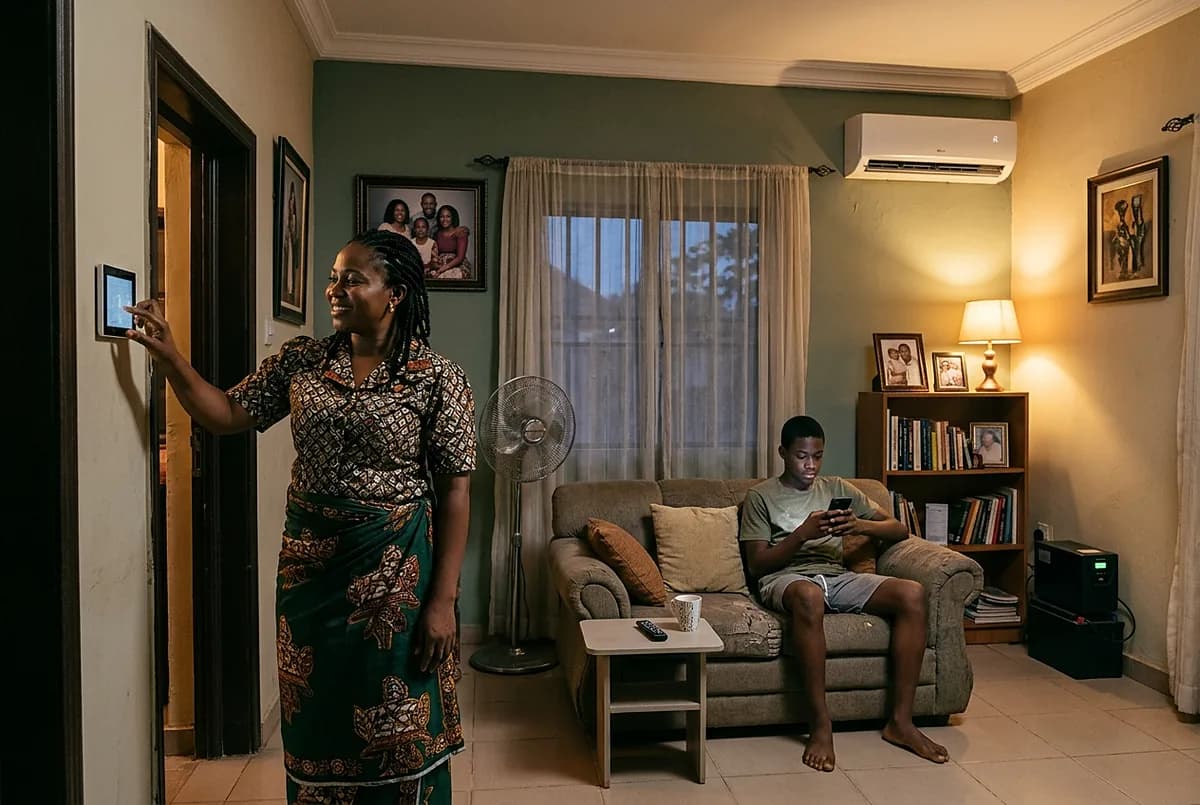
Load shedding, generator hours and rising tariffs have made energy efficiency a household budget item in Nigeria, not a luxury. Automation helps because it removes the decisions you forget to make — the AC left running, the standby load nobody sees.
1. Smart thermostats for air conditioning
Air conditioning is usually the single biggest load in a Nigerian home.
- Set the system to cool only when someone is present.
- Schedule cooling for the hours before you get home rather than all afternoon.
- Control it remotely so you can switch off what you forgot.
2. Automated lighting
Lighting is small per bulb and large in total.
- Motion sensors in corridors, stairwells, store rooms and outside.
- Daylight sensors so exterior lights only come on when they are needed.
- Timed schedules for security lighting instead of leaving it on all night.
3. Smart power strips
Standby load is invisible on a bill and constant. TVs, decoders, consoles and chargers all draw power while "off".
- Cut standby draw with a single switch per zone.
- Group devices so entertainment equipment goes off together.
- Schedule power-off times overnight.
4. Automated window treatments
Heat coming through glass is cooling load you then pay to remove.
- Close blinds or curtains during the hottest part of the day.
- Open them when the sun moves off that façade.
- Tie the schedule to the season so it adjusts itself.
5. Water heater automation
A water heater left on is one of the least efficient appliances in the house.
- Heat water only in the window before it is used.
- Link it to the inverter so it never runs on battery.
- Monitor it remotely and switch off if you are away.
6. Smart fans with temperature sensors
Fans move air for a fraction of the power an AC uses.
- Run fans automatically when a room passes a set temperature.
- Hand over to AC only when fans cannot cope.
- Let the fan stop when the room empties.
7. Energy monitoring
You cannot manage what you cannot see, and this is the change that makes the other six stick.
- Track consumption in real time, per circuit where possible.
- Identify the appliances that dominate your bill.
- Set alerts so an unusual load gets noticed the same day.
Start with one system
Do not automate the whole house at once. Pick the load that hurts most — almost always cooling — and fix that first. Then add monitoring, because the data tells you what to do next.
If you want this designed around your actual load rather than a generic kit, we size home systems every week — see the solar packages or book a site visit.